Guest Lecture by Mahak Singhal
April 15, 2026
•
4:00 pm
Live participation in Lübeck: CBBM Building, Ground Floor, Room Levi-Montalcini - Live participation in Berlin: ChariteCrossOver, Unterrichtsraum 344 (1. OG)
Guest Lecture by Mahak Singhal
April 15, 2026
•
4:00 pm
Live participation in Lübeck: CBBM Building, Ground Floor, Room Levi-Montalcini - Live participation in Berlin: ChariteCrossOver, Unterrichtsraum 344 (1. OG)
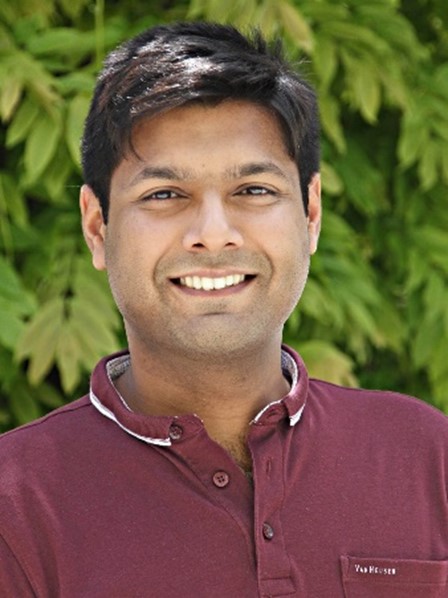
Description
Dynamic adaptability of the vascularendothelium in health and disease
Abstract
A quiescent, resilient layer of blood vessel-lining endothelial cells (ECs) isvital for maintaining organ function and enabling healthy aging. Much has been learnt in recent years about the mechanisms controlling the resilient EC phenotype and how its dysregulation results in disease initiation. Yet, little is known if and how mechanisms of vascular resilience are affected by environmental rhythmic stimuli (extrinsic (e.g., light-dark, feeding-fasting) or intrinsic (e.g., blood pressure, hematopoiesis)). Performing day/night analyses of organotypically differentiated ECs, we identified distinc torgan-specific time-of-the-day dependent transcriptomic programs of resting ECs in adult mice. These translate functionally into temporal vascular adaptations during the day that critically sustain steady-state tissue health and function. Our ongoing work with EC-specific clock gene targeting infers circadian determinants of vascular health in liver physiology.
Short Bio
Dr. Mahak Singhal is a Junior Research Group Leader at the European Center for Angioscience (ECAS), part of the Medical Faculty at Heidelberg University. Dr. Singhal completed his Ph.D. in Biosciences at Heidelberg University and DKFZ, under the supervision of Hellmut Augustin. His doctoral research focused on how blood and lymphatic vessels interact with tumor cells. His research earned him the Helmholtz Doctoral Prize in 2020 for outstanding research in health sciences across all Helmholtz centers in Germany. After a brief postdoctoral fellowship, he established his independent junior research group at ECAS in 2022. His research group explores how endothelial cells sense and respond to environmental and circadian cues. Dr. Singhal was awarded a 2025 European Research Council (ERC) Starting Grant, funding for his project on vascular rhythms and their impact on organismal health.


