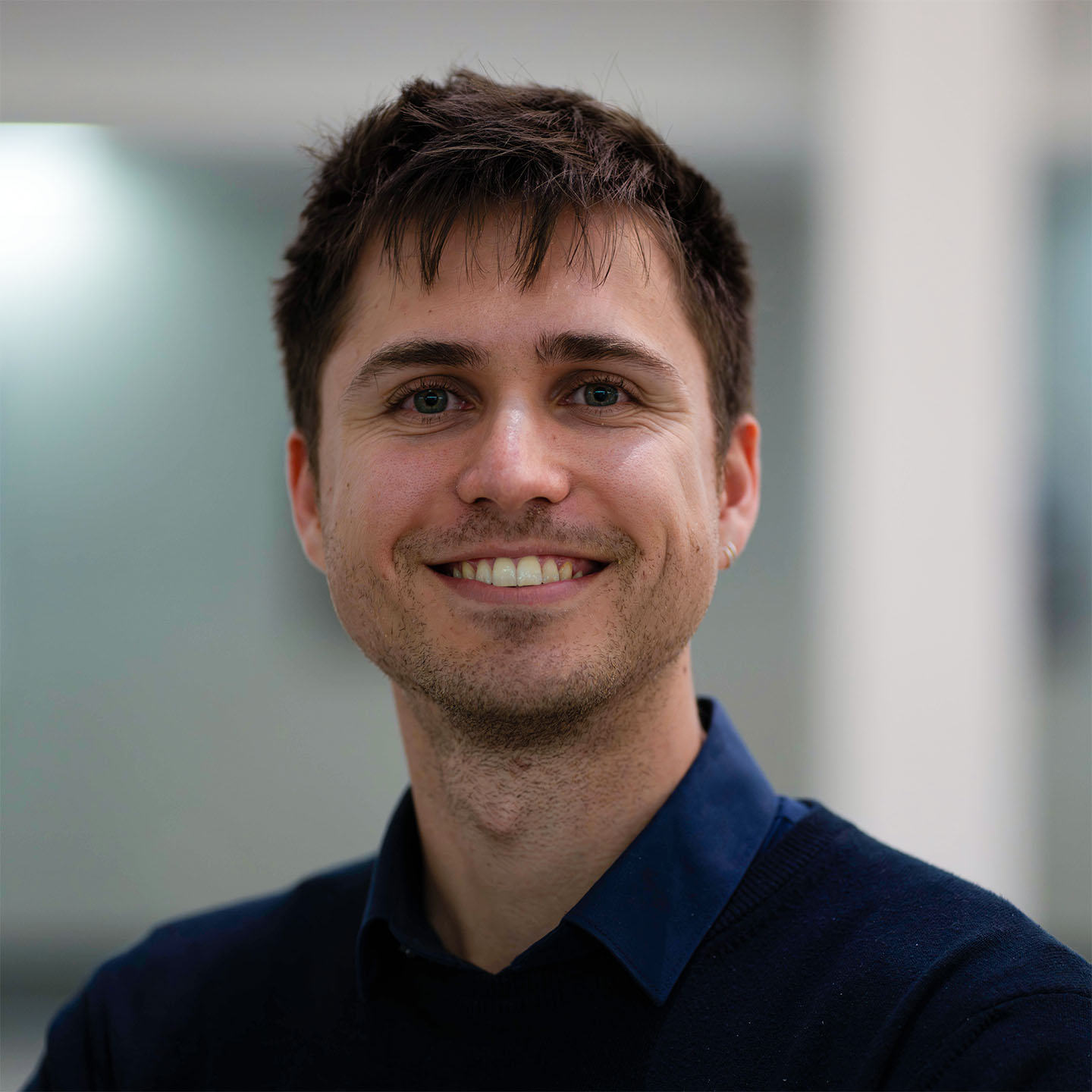
Lukas Huschet
Doktorand
•
LMU
Ich bin Biotechnologe, der zum Chronobiologen wurde, aus Spanien, und untersuche die Beziehung zwischen zirkadianem Rhythmus und Stoffwechsel in der Mausleber. Mit Fokus auf Kernproteine mittels Massenspektrometrie will ich die regulatorischen Netzwerke hinter gestörten zirkadianen Leberrhythmen bei Adipositas aufdecken.
Phone
Die Projekte von
Lukas Huschet
B02
Circadiane Desynchronisation und epigenetische Veränderung: Wechselwirkungen bei der Entwicklung und Auflösung von mit metabolischer Dysfunktion assoziierter Steatohepatitis
Circadiane Desynchronisation und epigenetische Veränderung: Wechselwirkungen bei der Entwicklung und Auflösung von mit metabolischer Dysfunktion assoziierter Steatohepatitis
Die Publikationen von
Lukas Huschet
CLOCK/BMAL1 interactome uncovers homeodomain factors as tissue regulators
August 8, 2026
•
Nature Cell Biology
Circadian clocks underlie daily rhythms in physiology by coordinating temporal patterns of gene expression and protein function throughout the body. At the core of this system in mammals is CLOCK/BMAL1, a ubiquitously expressed heterodimeric transcription factor complex that orchestrates tissue-specific circadian gene expression. The basis for this specificity remains unclear, but tissue-specific interactions at chromatin could provide one. Here we used chromatin immunoprecipitation coupled to mass spectrometry to map CLOCK/BMAL1-associated protein complexes on chromatin in mouse liver, kidney and lung. We detected 1,510 associated proteins, most of which were tissue-specific and not explained by protein abundance. Among these, we identified the homeodomain transcription factors PROX1, HNF1B and HOXA5 as tissue-enriched interactors that bind BMAL1, co-occupy most BMAL1 genomic sites and establish organ-restricted circadian transcription. Our findings demonstrate that tissue-specific transcription factors confer cellular identity on the core clock, thereby contributing to organ-specific patterns of rhythmic gene expression.


