Unsere Forschung entdecken
Bei TRR 418 eröffnen unsere Forschungen neue Einblicke in die circadiane Medizin. Diese Erkenntnisse werden in unseren Publikationen geteilt und bieten einen detaillierten Blick auf experimentelle, klinische und datenbasierte Studien, die zeigen, wie circadiane Rhythmen Gesundheit und Krankheit beeinflussen. Entdecken Sie unsere Publikationen, um die Evidenz, Methoden und Ideen hinter unserer Forschung kennenzulernen.
HairTime: A noninvasive assay for estimating circadian phase from a single hair sample
March 25, 2026
•
Proc Natl Acad Sci USA
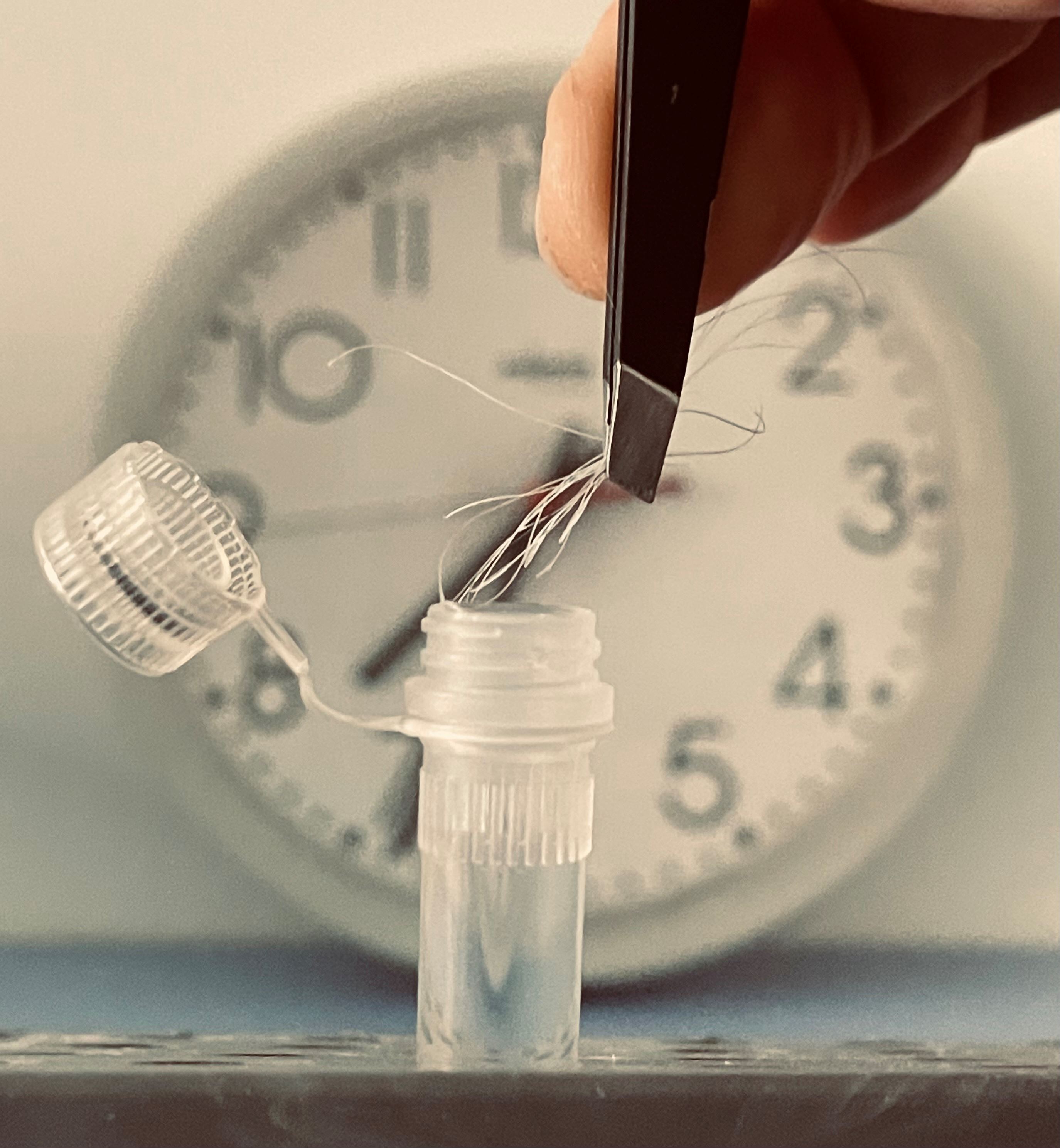
Circadian clocks govern daily physiological and behavioral processes and are crucial for health; disruptions can lead to various diseases. The circadian phase of entrainment—the phase of the internal circadian clock in relation to external environmental cycles—is influenced by both genetic and environmental factors, varies between individuals, and is reflected in daily behaviors such as sleep–wake patterns, cognitive performance, and physical activity. While circadian phase may also fluctuate within individuals, the dynamics and extent of such variation in daily life remain largely unexplored. The gold standard for circadian phase assessment, dim-light melatonin onset (DLMO), is impractical for large-scale studies, and blood-based molecular biomarkers, while promising, are limited in feasibility. To address these challenges, we developed HairTime, a noninvasive assay that estimates circadian phase from a single daytime hair sample. Developed and evaluated in two steps—a training and a validation study—HairTime demonstrated strong predictive power compared to DLMO. Suitable for large-scale studies, it was assessed using over 4,000 samples. Circadian phase estimations showed a normal distribution and were associated with age, sex, and notably, work schedules, with earlier timing on workdays, suggesting that societal factors can modulate internal rhythms. Together, these findings establish HairTime as a promising tool for assessing circadian phase in research and lay the foundation for future applications in personalized chronotherapy.
HairTime: A noninvasive assay for estimating circadian phase from a single hair sample
March 25, 2026
•
Proc Natl Acad Sci USA
Circadian clocks govern daily physiological and behavioral processes and are crucial for health; disruptions can lead to various diseases. The circadian phase of entrainment—the phase of the internal circadian clock in relation to external environmental cycles—is influenced by both genetic and environmental factors, varies between individuals, and is reflected in daily behaviors such as sleep–wake patterns, cognitive performance, and physical activity. While circadian phase may also fluctuate within individuals, the dynamics and extent of such variation in daily life remain largely unexplored. The gold standard for circadian phase assessment, dim-light melatonin onset (DLMO), is impractical for large-scale studies, and blood-based molecular biomarkers, while promising, are limited in feasibility. To address these challenges, we developed HairTime, a noninvasive assay that estimates circadian phase from a single daytime hair sample. Developed and evaluated in two steps—a training and a validation study—HairTime demonstrated strong predictive power compared to DLMO. Suitable for large-scale studies, it was assessed using over 4,000 samples. Circadian phase estimations showed a normal distribution and were associated with age, sex, and notably, work schedules, with earlier timing on workdays, suggesting that societal factors can modulate internal rhythms. Together, these findings establish HairTime as a promising tool for assessing circadian phase in research and lay the foundation for future applications in personalized chronotherapy.
Time-of-day immunochemotherapy in non-small cell lung cancer: a randomized phase 3 trial
February 2, 2026
•
Nature Medicine
Zhe Huang, Liang Zeng, Zhaohui Ruan, Qun Zeng, Huan Yan, Wenjuan Jiang, Yi Xiong, Chunhua Zhou, Haiyan Yang, Li Liu, Jiacheng Dai, Nachuan Zou, Shidong Xu, Ya Wang, Zhan Wang, Jun Deng, Xue Chen, Jing Wang, Hua Xiang, Xiaomei Li, Boris Duchemann, Guoqiang Chen, Yang Xia, Tony Mok, Christoph Scheiermann, Francis Lévi, Nong Yang, Yongchang Zhang
Retrospective studies suggest that early time-of-day (ToD) infusions of immunochemotherapy may improve efficacy. However, prospective randomized controlled trials are needed to validate it. In this randomized phase 3 LungTIME-C01 trial, 210 patients with treatment naive stage IIIC–IV non-small cell lung cancer (NSCLC) lacking driver mutations were randomly assigned in a 1:1 ratio to either an early or late ToD group, defined by the administration of the first four cycles of an anti-PD-1 agent before or after 15:00 h. The primary endpoint was progression-free survival (PFS), while secondary endpoints included overall survival (OS) and objective response rate (ORR). After a median follow-up of 28.7 months, the median PFS was 11.3 months (95% confidence interval (CI) = 9.2–13.4) in the early ToD group and 5.7 months (95% CI = 5.2–6.2) in the late ToD group, corresponding to a hazard ratio (HR) for earlier disease progression of 0.40 (95% CI = 0.29–0.55; P< 0.001). The median OS was 28.0 months (95% CI = not estimable (NE)–NE) in the early ToD group and 16.8 months (95% CI = 13.7–19.9) in the late ToD group, corresponding to an HR of an earlier death of 0.42 (95% CI = 0.29–0.60; P< 0.001). Treatment-related adverse events were consistent with the established safety profile, with no new safety signals observed. No significant differences in immune-related adverse events were observed between the two groups. Over the first four cycles, morning circulating CD8+ T cells increased in the early ToD group, whereas they declined in the late ToD group (P< 0.001). Furthermore, the ratio of activated (CD38+ HLA-DR+) versus exhausted (TIM-3+PD-1+) CD8+ T cells was higher in the early ToD group (P< 0.001) compared with the late ToD group (P< 0.001). In summary, our study indicates that early ToD immunochemotherapy substantially improves PFS and OS and is associated with enhanced antitumor CD8+ T cell characteristics compared with late ToD treatment.
Data integration and analysis for circadian medicine
February 15, 2023
•
Acta Physiologica
Lena Baum, Marco Johns, Maija Poikela, Ralf Möller, Bharath Ananthasubramaniam, Fabian Prasser
Data integration, data sharing, and standardized analyses are important enablers for data-driven medical research. Circadian medicine is an emerging field with a particularly high need for coordinated and systematic collaboration between researchers from different disciplines. Datasets in circadian medicine are multimodal, ranging from molecular circadian profiles and clinical parameters to physiological measurements and data obtained from (wearable) sensors or reported by patients. Uniquely, data spanning both the time dimension and the spatial dimension (across tissues) are needed to obtain a holistic view of the circadian system. The study of human rhythms in the context of circadian medicine has to confront the heterogeneity of clock properties within and across subjects and our inability to repeatedly obtain relevant biosamples from one subject. This requires informatics solutions for integrating and visualizing relevant data types at various temporal resolutions ranging from milliseconds and seconds to minutes and several hours. Associated challenges range from a lack of standards that can be used to represent all required data in a common interoperable form, to challenges related to data storage, to the need to perform transformations for integrated visualizations, and to privacy issues. The downstream analysis of circadian rhythms requires specialized approaches for the identification, characterization, and discrimination of rhythms. We conclude that circadian medicine research provides an ideal environment for developing innovative methods to address challenges related to the collection, integration, visualization, and analysis of multimodal multidimensional biomedical data.
Keywords: chronomedicine; data integration; data science; data visualization; time-series data.
Sleep and circadian rhythms in delayed sleep-wake phase disorder: Phenotypic differences between patients with and without comorbid depression
January 15, 2025
•
Journal of Sleep Research
Cátia Reis, Luísa K Pilz, Teresa Paiva, Maria Paz Hidalgo, Kenneth P Wright Jr
Delayed sleep-wake phase disorder involves chronic difficulty going to bed and waking up at conventional times and often co-occurs with depression. This study compared sleep and circadian rhythms between patients with delayed sleep-wake phase disorder with depression (DSWPD-D) and without (DSWPD-ND) comorbid depression. Clinical records of 162 patients with delayed sleep-wake phase disorder (70 DSWPD-D, 92 DSWPD-ND) were analysed, including a subset of 76 patients with circadian phase determined by the dim light melatonin onset. Variables assessed included sleep behaviour on work and free days, weekly sleep duration, social jet lag, chronotype, and phase relationships between dim light melatonin onset and sleep/wake times. Mean (SD) or median [Q1-Q3] values were compared using t-tests or Mann-Whitney. Patients with DSWPD-D showed longer sleep on workdays (DSWPD-D = 7.63 hr [1.70] versus DSWPD-ND = 6.20 hr [1.59]; p < 0.001), but not on free days. DSWPD-D also showed later sleep onset (DSWPD-D = 03:30 14;hours [02:49 hours-04:23 hours], DSWPD-ND = 02:53 hours [02:00 hours-03:41 hours]; p = 0.02) and wake times (DSWPD-D = 11:30 hours [09:30 hours-13:00 hours], DSWPD-ND = 08:45 hours [07:20 hours-11:00 hours]; p < 0.01) on workdays. Furthermore, DSWPD-D showed less social jet lag (DSWPD-D = 0.38 [0.00-1.75] versus DSWPD-ND = 2.17 [1.25-3.03]; p < 0.01), and reported higher anxiety symptoms (DSWPD-D = 71.4% versus DSWPD-ND = 45.8%; p = 0.03) and medication use (DSWPD-D = 75.0% versus DSWPD-ND = 43.8%; p = 0.01). DSWPD-D also showed wider dim light melatonin onset phase relationships with dim light melatonin onset-mid-sleep (DSWPD-D = -5.77 [1.32] versus DSWPD-ND = -4.86 [1.53]; p = 0.01) and dim light melatonin onset-waketime (DSWPD-D = -9.46 [1.82]; DSWPD-ND = -8.13 [2.08]; p = 0.01). Multivariable Poisson regression, adjusted for age and sex, showed more medication use, less social jet lag, and longer weekly sleep duration as significantly associated with DSWPD-D. These findings suggest potential biopsychosocial protective factors linked to depression in delayed sleep-wake phase disorder. Further research is required to confirm these phenotypic differences and their relevance to delayed sleep-wake phase disorder aetiology and treatment.
Keywords: depression; dim light melatonin onset; sleep duration; social jet lag; workdays.
Dysfunction of circadian and sleep rhythms in the early stages of Alzheimer's disease
March 31, 2023
•
Acta Physiologica
Ludovica Rigat, Koliane Ouk, Achim Kramer, Josef Priller
Dysfunction of circadian and sleep rhythms is an early feature of many neurodegenerative diseases. Alzheimer's disease (AD) is a progressive neurodegenerative disorder resulting in cognitive and psychiatric disturbances. Although it is largely unclear whether dysfunctions in sleep and circadian rhythms contribute to the etiology of AD or are a consequence of the disease, there is evidence that these conditions are involved in a complex self-reinforcing bidirectional relationship. According to the recent studies, dysregulation of the circadian clock already occurs during the asymptomatic stage of the disease and could promote neurodegeneration. Thus, restoration of sleep and circadian rhythms in preclinical AD may represent an opportunity for early intervention to slow the disease course.
Keywords: Alzheimer's disease; circadian system; clock; neurodegeneration; sleep.
Modification in ICU Design May Affect Delirium and Circadian Melatonin: A Proof of Concept Pilot Study
April 1, 2024
•
Critical Care Medicine
Claudia Spies, Helmut Piazena, Maria Deja, Klaus-Dieter Wernecke, Thomas Willemeit, Alawi Luetz; ICU Design Working Group
Objectives: Nonpharmacologic delirium management is recommended by current guidelines, but studies on the impact of ICU design are still limited. The study's primary purpose was to determine if a multicomponent change in room design prevents ICU delirium. Second, the influence of lighting conditions on serum melatonin was assessed.
Design: Prospective observational cohort pilot study.
Setting: The new design concept was established in two two-bed ICU rooms of a university hospital. Besides modifications aimed at stress relief, it includes a new dynamic lighting system.
Patients: Seventy-four adult critically ill patients on mechanical ventilation with an expected ICU length of stay of at least 48 hours, treated in modified or standard rooms.
Interventions: None.
Measurements and main results: The clinical examination included a prospective assessment for depth of sedation, delirium, and pain every 8 hours using validated scores. Blood samples for serum melatonin profiles were collected every 4 hours for a maximum of three 24-hour periods. Seventy-four patients were included in the analysis. Seventy-six percent ( n = 28) of patients in the standard rooms developed delirium compared with 46% of patients ( n = 17) in the modified rooms ( p = 0.017). Patients in standard rooms (vs. modified rooms) had a 2.3-fold higher delirium severity (odds ratio = 2.292; 95% CI, 1.582-3.321; p < 0.0001). Light intensity, calculated using the measure of circadian effective irradiance, significantly influenced the course of serum melatonin ( p < 0.0001). Significant interactions ( p < 0.001) revealed that differences in serum melatonin between patients in standard and modified rooms were not the same over time but varied in specific periods of time.
Conclusions: Modifications in ICU room design may influence the incidence and severity of delirium. Dedicated light therapy could potentially influence delirium outcomes by modulating circadian melatonin levels.
Distinct diurnal temperature rhythm patterns in critical illness myopathy: secondary analysis of two prospective trials
October 27, 2025
•
Springer Nature
D Mewes, S Weber-Carstens, K Rubarth, S D Boie, C Spies, A Kramer, J Fielitz, T Wollersheim, B Ananthasubramaniam, F Braune, L Hancke, L Spies, F Balzer, L J Engelhardt
Background: Critical illness myopathy (CIM) increases mortality and causes long-term disabilities. CIM is characterized by reduced muscle excitability, muscle atrophy, weakness, and impaired glucose metabolism. Functional circadian rhythms are important for skeletal muscle homeostasis. Circadian rhythms are often disrupted during critical illness in the Intensive Care Unit (ICU). This analysis investigates whether diurnal temperature rhythms differ in critically ill CIM compared to no-CIM patients.
Methods: This is a secondary analysis of two prospective trials including critically ill patients with CIM (n = 32) or no-CIM (n = 30) based on electrophysiological tests. Diurnal body temperature rhythms were compared between CIM and no-CIM groups in reference to n = 16 participants included in a bed rest study. Cosinor analysis was performed to determine the rhythm parameters and classify into rhythm classes. Aggregated and longitudinal data were compared between groups using non-parametric tests. Rhythm parameters were correlated with muscle atrophy, weakness and insulin sensitivity.
Results: CIM and no-CIM patients had severe multiorgan failure (median SOFA score 12 in both groups, p = 0.39). The temperature rhythm nadir timepoint was shifted in CIM patients (10:43 [09:21, 12:22]) and no-CIM (11:12 [09:43, 13:30]) compared to the healthy bed rest group (5:03 [3:22, 6:36]) p < 0.001. CIM patients showed lower temperature rhythm mesors than no-CIM patients (p = 0.041). The temperature rhythm amplitude was lower in both CIM and no-CIM patients compared to the healthy bed rest group (CIM: 0.3 °C [0.2, 0.4]; no-CIM: 0.2 °C [0.2, 0.3]; healthy bed rest: 0.5 °C [0.2, 0.6]; p < 0.01). Compared to no-CIM patients, CIM patients had higher temperature rhythm amplitudes (p = 0.021) and showed a less pronounced reduction in temperature rhythm amplitudes during ICU stay (p = 0.017). A higher temperature rhythm amplitude correlated negatively with M. vastus lateralis myocyte cross-sectional area.
Conclusions: Heterogeneous phase shifts of diurnal temperature rhythms in CIM and no-CIM groups compared to healthy bed rest volunteers may indicate ICU-related circadian disruption. Suppression of temperature rhythm amplitude during ICU stay could represent an adaptive response to this disruption. Blunted amplitude suppression observed in CIM compared to no-CIM patients might reflect reduced adaptation, potentially contributing to muscle catabolism. This hypothesis-generating analysis underlines the need for mechanistic studies exploring circadian regulation in skeletal muscle during critical illness.
Keywords: Body temperature; Circadian rhythm disruption; Circadian rhythms; Critical illness; Critical illness myopathy; Diurnal rhythms; Muscle weakness; Skeletal muscle atrophy; Temperature rhythm.


