Unsere Forschung entdecken
Bei TRR 418 eröffnen unsere Forschungen neue Einblicke in die circadiane Medizin. Diese Erkenntnisse werden in unseren Publikationen geteilt und bieten einen detaillierten Blick auf experimentelle, klinische und datenbasierte Studien, die zeigen, wie circadiane Rhythmen Gesundheit und Krankheit beeinflussen. Entdecken Sie unsere Publikationen, um die Evidenz, Methoden und Ideen hinter unserer Forschung kennenzulernen.
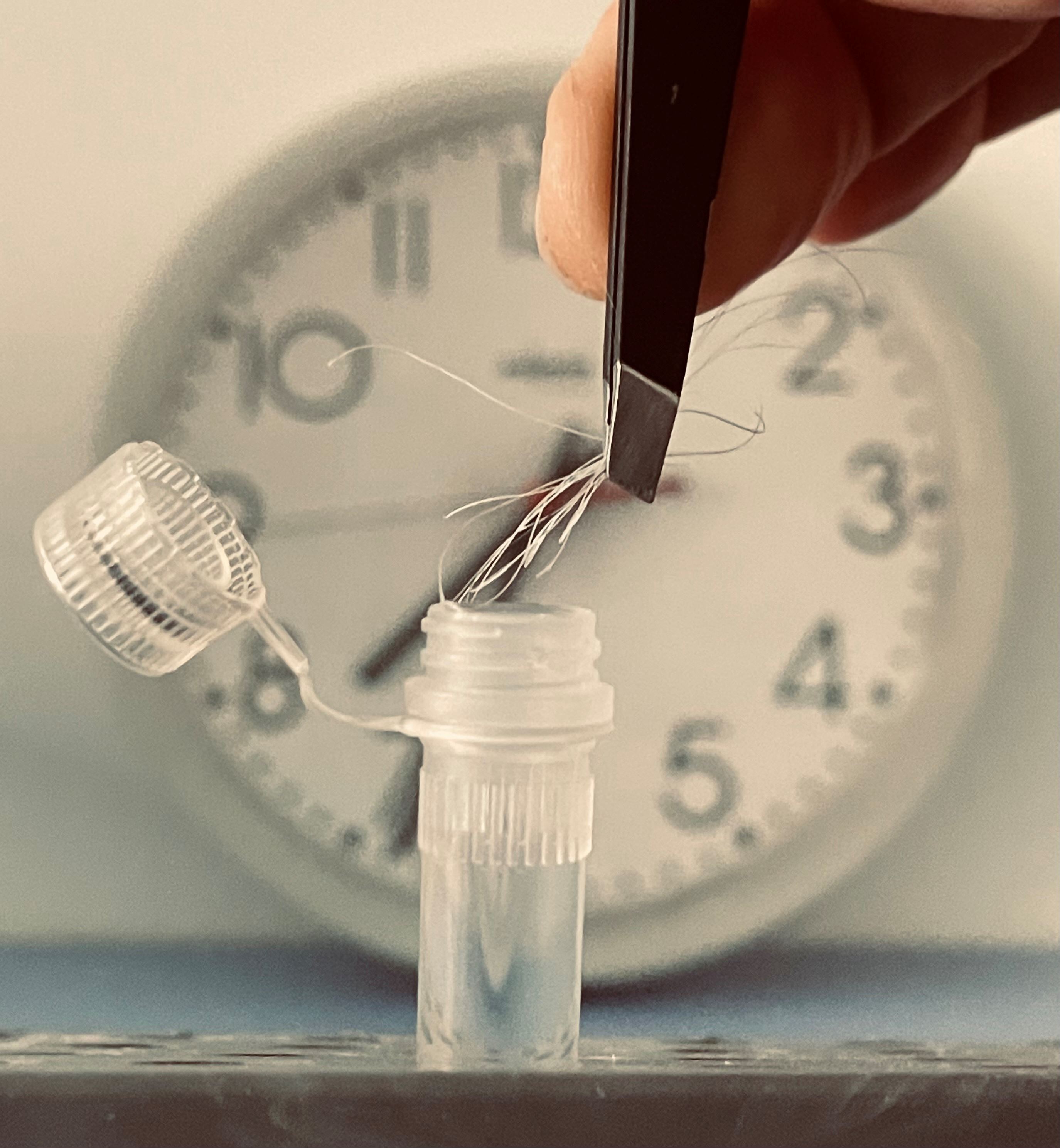
HairTime: A noninvasive assay for estimating circadian phase from a single hair sample
March 25, 2026
•
Proc Natl Acad Sci USA
Circadian clocks govern daily physiological and behavioral processes and are crucial for health; disruptions can lead to various diseases. The circadian phase of entrainment—the phase of the internal circadian clock in relation to external environmental cycles—is influenced by both genetic and environmental factors, varies between individuals, and is reflected in daily behaviors such as sleep–wake patterns, cognitive performance, and physical activity. While circadian phase may also fluctuate within individuals, the dynamics and extent of such variation in daily life remain largely unexplored. The gold standard for circadian phase assessment, dim-light melatonin onset (DLMO), is impractical for large-scale studies, and blood-based molecular biomarkers, while promising, are limited in feasibility. To address these challenges, we developed HairTime, a noninvasive assay that estimates circadian phase from a single daytime hair sample. Developed and evaluated in two steps—a training and a validation study—HairTime demonstrated strong predictive power compared to DLMO. Suitable for large-scale studies, it was assessed using over 4,000 samples. Circadian phase estimations showed a normal distribution and were associated with age, sex, and notably, work schedules, with earlier timing on workdays, suggesting that societal factors can modulate internal rhythms. Together, these findings establish HairTime as a promising tool for assessing circadian phase in research and lay the foundation for future applications in personalized chronotherapy.
HairTime: A noninvasive assay for estimating circadian phase from a single hair sample
March 25, 2026
•
Proc Natl Acad Sci USA
Circadian clocks govern daily physiological and behavioral processes and are crucial for health; disruptions can lead to various diseases. The circadian phase of entrainment—the phase of the internal circadian clock in relation to external environmental cycles—is influenced by both genetic and environmental factors, varies between individuals, and is reflected in daily behaviors such as sleep–wake patterns, cognitive performance, and physical activity. While circadian phase may also fluctuate within individuals, the dynamics and extent of such variation in daily life remain largely unexplored. The gold standard for circadian phase assessment, dim-light melatonin onset (DLMO), is impractical for large-scale studies, and blood-based molecular biomarkers, while promising, are limited in feasibility. To address these challenges, we developed HairTime, a noninvasive assay that estimates circadian phase from a single daytime hair sample. Developed and evaluated in two steps—a training and a validation study—HairTime demonstrated strong predictive power compared to DLMO. Suitable for large-scale studies, it was assessed using over 4,000 samples. Circadian phase estimations showed a normal distribution and were associated with age, sex, and notably, work schedules, with earlier timing on workdays, suggesting that societal factors can modulate internal rhythms. Together, these findings establish HairTime as a promising tool for assessing circadian phase in research and lay the foundation for future applications in personalized chronotherapy.
Hepatocyte Circadian Clocks Control Cholesterol Metabolism and Protect From Metabolic Dysfunction–Associated Steatohepatitis
May 12, 2026
•
Cellular and Molecular Gastroenterology and Hepatology
Leonardo V. M. de Assis, Lina Jegodzinski, Julica Inderhees, Sylvia J. Wowro, Juliana Marques Affonso, Isabel Heyde, Emelie Luise Fischer, Witigo von Schönfels, Andrea Schenk, Florian Roßner, Michael Schupp, Jens U. Marquardt, Münevver Demir, and Henrik Oster
The circadian clock synchronizes physiological processes with the 24-hour light–dark cycle. Clock disruption contributes to metabolic disorders, including metabolic dysfunction–associated steatohepatitis. We investigated the role of the hepatocyte clock in metabolic dysfunction–associated steatohepatitis using hepatocyte-specific Bmal1 deletion (Hep-Bmal1KO) mice. Hep-Bmal1KO mice showed faster metabolic dysfunction–associated steatohepatitis progression with increased hepatic cholesterol, inflammation, and fibrosis. Transcriptomic and lipidomic analyses revealed dysregulated cholesterol metabolism in Hep-Bmal1KO mice, marked by reduced expression and disrupted rhythmicity of key cholesterol-related genes. Bioinformatic analyses identified Chrebp as a potential coregulator of these transcriptional changes. In an in vitro model with palmitate exposure and gene silencing, we found that Bmal1, but not Chrebp, regulated cholesterol accumulation, indicating Bmal1’s specific role in hepatic cholesterol metabolism. Translating our findings to a human patient cohort revealed a significantly shifted circadian phase, despite no marked effect on hepatic cholesterol levels in the livers of patients with more advanced liver disease (ie, metabolic dysfunction–associated steatohepatitis) compared with simple steatosis. Taken altogether, our findings offer a roadmap to understand the hepatocyte clock’s role in metabolic dysfunction–associated steatohepatitis and its potential as a therapeutic target.
Digital biomarkers in non-communicable diseases
June 15, 2026
•
BIOMARKERS
Louis Agha-Mir-Salima, Elias Grünewald, Felix Balzer and Katarina Braune
Digital biomarkers—objective, quantifiable physiological and behavioral measures collected through digital tools—enable continuous health assessment and hold promise for precision medicine. With non-communicable diseases (NCDs) being the leading cause of morbidity and mortality worldwide, digital biomarkers can provide early detection, continuous monitoring, and individualized care. This review examines advances in digital biomarkers across NCD domains, including endocrinology, cardiology, respiratory medicine, neurology, and mental health, with a focus on wearable technologies that continuously capture real-world behavior and physiology. Continuous glucose monitoring in diabetes exemplifies successful clinical translation, while digital biomarkers in cardiology, respiratory medicine, and neurology are at varying stages of validation and adoption. Most digital biomarkers across internal medicine, neurology, and mental health remain in early validation stages. Critical barriers to implementation include limited validation in diverse populations, lack of interoperability, insufficient integration with electronic health records, challenges in multimodal data synthesis, and underdeveloped regulatory pathways. Equity concerns persist as infrastructure, affordability, and capacity-building needs vary globally.Bridging the gap between consumer self-tracking and clinically validated, guideline-compatible digital biomarkers requires rigorous multicenter validation, standardized interfaces, open data models, secure and ethical data infrastructures, and equitable design. Coordinated efforts addressing these challenges are essential to enable digital biomarkers to improve prevention, diagnosis, and management of NCDs.
Early but not late time-restricted eating improves an actigraphy-estimated sleep quality in women with overweight or obesity: secondary analysis of the crossover ChronoFast trial
May 26, 2026
•
Frontiers in Nutrition
Beeke Peters, Jennifer Jokisch, Julia Schwarz, Bettina Schuppelius, Andreas F. H. Pfeiffer, Andreas Michalsen, Achim Kramer and Olga Pivovarova-Ramich
Metabolic disorders are closely linked to sleep disturbances. Timerestricted eating (TRE) can improve metabolic disturbances, but its impact onsleep quality is insufficiently studied and recommendations regarding the eatingtiming in TRE are pending. Our aim was to investigate the impact of early TRE(eTRE) and late TRE (lTRE) on sleep quality in obesity. This is a secondary analysis of the randomized crossover trial, whichincluded 31 women with overweight and obesity. Following a 2–4 week baselineperiod, participants were assigned to either a two-week eTRE (eating 8a.m−4p.m.) or a two-week lTRE (eating 1 p.m.−9 p.m.), separated by a two-weekwashout phase. Sleep metrics were assessed objectively by blinded actigraphyand subjectively using Pittsburgh Sleep Quality Index (PSQI) and self-reportof sleep quality. Hunger and satiety were examined using a Visual AnalogueScale (VAS). Actigraphy revealed no between-intervention differences in changesin sleep metrics, but improvements were observed within eTRE compared withbaseline for sleep efficiency (p = 0.047), sleep fragmentation index (SFI) (p= 0.029), and awakening length (p = 0.043). Individuals with lowest sleepquality at the baseline showed its largest improvements in eTRE. PSQI scoresand self-reported sleep quality remained unchanged between and within bothinterventions. There were no differences in evening hunger and satiety scoresbetween eTRE and lTRE, and no correlations between hunger or satiety andsleep quality
HairTime: A noninvasive assay for estimating circadian phase from a single hair sample
March 25, 2026
•
Proc Natl Acad Sci USA
Bert Maier, Luísa K. Pilz, Selin Özcakir, Ali Rahjouei, Ashraf N. Abdo, Jan de Zeeuw, Dieter Kunz, Achim Kramer
Circadian clocks govern daily physiological and behavioral processes and are crucial for health; disruptions can lead to various diseases. The circadian phase of entrainment—the phase of the internal circadian clock in relation to external environmental cycles—is influenced by both genetic and environmental factors, varies between individuals, and is reflected in daily behaviors such as sleep–wake patterns, cognitive performance, and physical activity. While circadian phase may also fluctuate within individuals, the dynamics and extent of such variation in daily life remain largely unexplored. The gold standard for circadian phase assessment, dim-light melatonin onset (DLMO), is impractical for large-scale studies, and blood-based molecular biomarkers, while promising, are limited in feasibility. To address these challenges, we developed HairTime, a noninvasive assay that estimates circadian phase from a single daytime hair sample. Developed and evaluated in two steps—a training and a validation study—HairTime demonstrated strong predictive power compared to DLMO. Suitable for large-scale studies, it was assessed using over 4,000 samples. Circadian phase estimations showed a normal distribution and were associated with age, sex, and notably, work schedules, with earlier timing on workdays, suggesting that societal factors can modulate internal rhythms. Together, these findings establish HairTime as a promising tool for assessing circadian phase in research and lay the foundation for future applications in personalized chronotherapy.
Remodeling of human diurnal adipose tissue transcriptome by the composition of morning and afternoon meals
March 12, 2026
•
Food Research International
Jorge R. Soliz-Rueda, Katharina Kessler, Karsten Jürchott, Carsten Sticht, Silke Hornemann , Achim Kramer, Andreas F.H. Pfeiffer, Olga Pivovarova-Ramich
Circadian clocks orchestrate metabolic processes in the whole body and their response to food. Therefore, not only what and how much, but also when we eat has a significant impact on metabolism. In this context, daytime of carbohydrate and fat intake was recently shown to alter the metabolic state and potentially affect the disease risk. However, molecular mechanisms of this regulation in humans are poorly understood. In this crossover trial, we investigated the effects of two isocaloric 4-week dietary patterns – high carbohydrate in the morning and high fat in the afternoon (HC/HF) and the reverse (HF/HC) - on the subcutaneous adipose tissue (SAT) in overweight non-diabetic men. The SAT transcriptome was assessed using microarrays. Additionally, gene expression in peripheral blood monocytes (PBMCs) was analysed by qPCRs. Analysis of SAT samples collected across the day identified 1386 genes exhibiting diurnal oscillations. In SAT, both oscillatory and non-oscillatory genes related to lipid and glucose metabolism were modulated by the timing of macronutrient intake. Notably, expression of inflammatory response genes in SAT was elevated after HC/HF compared to HF/HC, suggesting that the HC/HF diet might promote an early proinflammatory state in SAT due to higher fat intake in the afternoon. Diet-induced remodelling of the SAT transcriptome was partly reflected in PBMCs. These findings demonstrate that diurnal macronutrient distribution significantly reshapes the SAT transcriptome, underscoring the relevance of eating timing-based (chrononutritional) strategies for prevention of metabolic dysfunction and systemic inflammation associated with obesity and type 2 diabetes.
Lack of GPNMB Is Associated With Altered Lipid and Glucose Metabolism and Disrupted Diurnal Hepatic Glycogen Regulation
March 9, 2026
•
The FASEB Journal
Eliz Maria de Oliveira Furtado, Lina Jegodzinski, Juliano Jefferson da Silva, Ana Flávia Tostes, Lucas dos Santos, Pietra Souza Barsanele, Beatriz Santana-Lima, Luciana Chagas Caperuto, Mery Natali Silva Abreu, Darko Castven, Andrea Schenk, Danusa Soares Dias, Jens U. Marquardt, Maristela Oliveira Poletini, Leonardo Vinícius Monteiro de Assis, Maria Nathália Moraes
Higher serum levels of GPNMB are linked to type 2 diabetes mellitus (T2DM) and metabolic dysfunction-associated steatotic liver disease (MASLD). Disruption of circadian rhythms also influences the development and progression of MASLD. In this study, we investigated how GPNMB modulates hepatic glycogen metabolism and its potential interaction with the hepatic circadian clock. Male DBA/2 J mice, either wild-type (GP+) or carrying an inactivating Gpnmb mutation (GP−), were fed a high-fat diet (48.4% fat) supplemented with 30% fructose in drinking water for 12 weeks. Despite similar weight gain, GP− mice displayed greater global fat mass accumulation and elevated serum triglyceride and cholesterol levels. Surprisingly, GP− mice showed improved glucose tolerance, whereas GP+ mice developed impaired glycemic control. Indirect calorimetry under thermoneutral conditions (30°C) revealed loss of diurnal rhythmicity in energy expenditure (EE) in GP− mice, which was independent of food intake. Despite its preserved rhythms, hepatic clock gene expression in GP− mice showed increased MESOR (e.g., Per1, Per2, and Nr1d1) and increased amplitude (e.g., Nr1d1), indicating higher expression levels throughout the day. GPNMB deficiency further impaired hepatic glycogen storage dynamics, which was attributed to reduced AKT phosphorylation (indicative of defective insulin signaling), reduced FOXO1 phosphorylation, and increased PEPCK-M. Translating our findings to human MASLD patients, GPNMB expression obtained from liver biopsies showed a clear increase across MASLD progression. Importantly, patients with metabolic dysfunction-associated steatohepatitis (MASH) and diabetes who received anti-diabetic treatment showed a reduction in hepatic GPNMB expression. Collectively, our findings suggest that GPNMB plays a role in metabolic adaptation to obesogenic diets, as a Gpnmb loss-of-function model reveals an association with impaired hepatic insulin signaling and glycogen metabolism despite improved systemic glucose tolerance in mice, whereas hepatic GPNMB upregulation correlates with MASLD progression in humans.


