Luísa Pilz
Projektleiterin
•
Charité
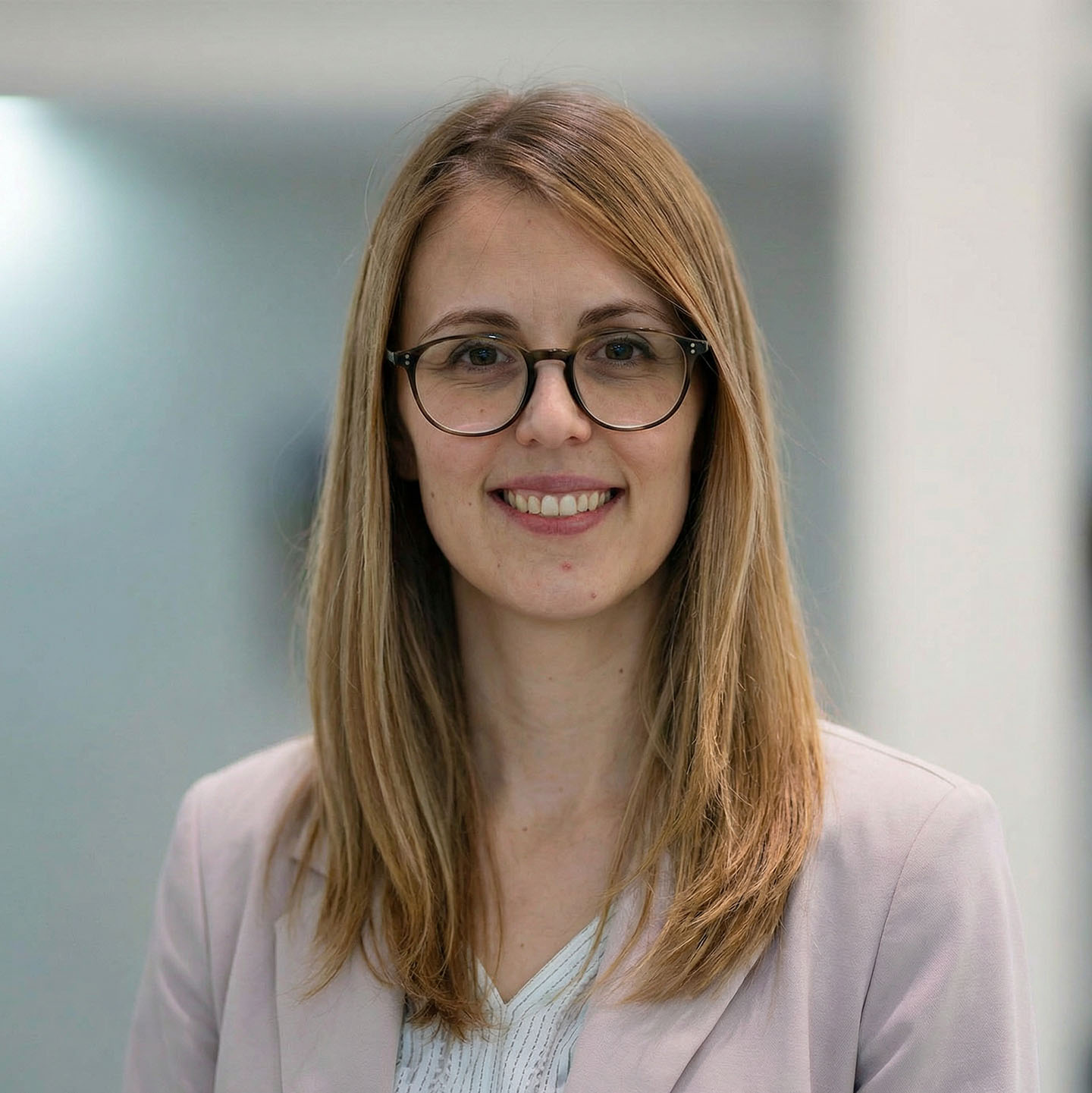
Ich bin Biomedizinerin und Juniorprofessorin für Zirkadiane Medizin, Charité. Meine Forschung charakterisiert zirkadiane Organisation im Alltags- und Klinikkontext sowie deren Bedeutung für Gesundheit und Wohlbefinden. Unser Team entwickelt digitale/physiologische Ansätze zur Erfassung zirkadianer Gesundheit und überträgt Chronobiologie in gesundheitsfördernde, klinisch anwendbare Strategien.
Phone
Die Projekte von
Luísa Pilz

C03
Nutzung von Daten zur circadianen Störung zur Förderung der psychischen Gesundheit und des Wohlbefindens
Nutzung von Daten zur circadianen Störung zur Förderung der psychischen Gesundheit und des Wohlbefindens
Die Publikationen von
Luísa Pilz
HairTime: A noninvasive assay for estimating circadian phase from a single hair sample
March 25, 2026
•
Proc Natl Acad Sci USA
Circadian clocks govern daily physiological and behavioral processes and are crucial for health; disruptions can lead to various diseases. The circadian phase of entrainment—the phase of the internal circadian clock in relation to external environmental cycles—is influenced by both genetic and environmental factors, varies between individuals, and is reflected in daily behaviors such as sleep–wake patterns, cognitive performance, and physical activity. While circadian phase may also fluctuate within individuals, the dynamics and extent of such variation in daily life remain largely unexplored. The gold standard for circadian phase assessment, dim-light melatonin onset (DLMO), is impractical for large-scale studies, and blood-based molecular biomarkers, while promising, are limited in feasibility. To address these challenges, we developed HairTime, a noninvasive assay that estimates circadian phase from a single daytime hair sample. Developed and evaluated in two steps—a training and a validation study—HairTime demonstrated strong predictive power compared to DLMO. Suitable for large-scale studies, it was assessed using over 4,000 samples. Circadian phase estimations showed a normal distribution and were associated with age, sex, and notably, work schedules, with earlier timing on workdays, suggesting that societal factors can modulate internal rhythms. Together, these findings establish HairTime as a promising tool for assessing circadian phase in research and lay the foundation for future applications in personalized chronotherapy.
Sleep and circadian rhythms in delayed sleep-wake phase disorder: Phenotypic differences between patients with and without comorbid depression
January 15, 2025
•
Journal of Sleep Research
Delayed sleep-wake phase disorder involves chronic difficulty going to bed and waking up at conventional times and often co-occurs with depression. This study compared sleep and circadian rhythms between patients with delayed sleep-wake phase disorder with depression (DSWPD-D) and without (DSWPD-ND) comorbid depression. Clinical records of 162 patients with delayed sleep-wake phase disorder (70 DSWPD-D, 92 DSWPD-ND) were analysed, including a subset of 76 patients with circadian phase determined by the dim light melatonin onset. Variables assessed included sleep behaviour on work and free days, weekly sleep duration, social jet lag, chronotype, and phase relationships between dim light melatonin onset and sleep/wake times. Mean (SD) or median [Q1-Q3] values were compared using t-tests or Mann-Whitney. Patients with DSWPD-D showed longer sleep on workdays (DSWPD-D = 7.63 hr [1.70] versus DSWPD-ND = 6.20 hr [1.59]; p < 0.001), but not on free days. DSWPD-D also showed later sleep onset (DSWPD-D = 03:30 14;hours [02:49 hours-04:23 hours], DSWPD-ND = 02:53 hours [02:00 hours-03:41 hours]; p = 0.02) and wake times (DSWPD-D = 11:30 hours [09:30 hours-13:00 hours], DSWPD-ND = 08:45 hours [07:20 hours-11:00 hours]; p < 0.01) on workdays. Furthermore, DSWPD-D showed less social jet lag (DSWPD-D = 0.38 [0.00-1.75] versus DSWPD-ND = 2.17 [1.25-3.03]; p < 0.01), and reported higher anxiety symptoms (DSWPD-D = 71.4% versus DSWPD-ND = 45.8%; p = 0.03) and medication use (DSWPD-D = 75.0% versus DSWPD-ND = 43.8%; p = 0.01). DSWPD-D also showed wider dim light melatonin onset phase relationships with dim light melatonin onset-mid-sleep (DSWPD-D = -5.77 [1.32] versus DSWPD-ND = -4.86 [1.53]; p = 0.01) and dim light melatonin onset-waketime (DSWPD-D = -9.46 [1.82]; DSWPD-ND = -8.13 [2.08]; p = 0.01). Multivariable Poisson regression, adjusted for age and sex, showed more medication use, less social jet lag, and longer weekly sleep duration as significantly associated with DSWPD-D. These findings suggest potential biopsychosocial protective factors linked to depression in delayed sleep-wake phase disorder. Further research is required to confirm these phenotypic differences and their relevance to delayed sleep-wake phase disorder aetiology and treatment.
Keywords: depression; dim light melatonin onset; sleep duration; social jet lag; workdays.
Challenges and Recommendations for Integrating Circadian Medicine in Critical Care: A Roadmap
December 20, 2025
•
Chest
Background: Circadian rhythms are often severely disrupted in critically ill patients in the ICU. The ICU environment, characterized by irregular light-dark signals, continuous nutrition, and round-the-clock interventions, contributes to this disruption by providing weak and conflicting timing cues to the circadian system. Extensive scientific research has demonstrated that circadian rhythms play a vital role in regulating physiology and maintaining overall health. Therefore, integrating circadian principles into critical care may represent a promising strategy to improve patient outcomes in the ICU.
Research question: What are the key challenges of integrating circadian medicine into critical care, what steps can address these challenges, and which recommendations can guide future study designs and clinical implementation?
Study design and methods: We convened a 5-day workshop in September 2024 that brought together 24 international experts with backgrounds in circadian biology, critical care, and implementation science. Each day was organized around a predefined theme, with morning presentations and plenary discussions, and afternoons dedicated to drafting a list of Propositions and Recommendations in breakout groups. Propositions and Recommendations were finalized via a post-workshop survey requiring ≥ 75% agreement.
Results: This roadmap summarizes the discussions and outcomes of the workshop, structured around a set of Propositions and Recommendations, and provides a framework for building a robust evidence base for integrating circadian principles into ICU practice. Key recommendations include the development of circadian outcome measures tailored for use in the ICU and using standardized frameworks for evaluating the effect of circadian interventions in clinical trials.
Interpretation: Altogether, this roadmap provides an interdisciplinary framework resulting from a collaborative effort of ICU clinicians, circadian biologists, and implementation specialists, for building a robust evidence base for integrating circadian principles into ICU research and practice.
Keywords: ICU; circadian rhythms; critical care; critical illness; meeting report.


